Big Game Weekend Powered by the People
At this year's Big Game near San Francisco, 113,000+ people connected through Helium on the peak day.
Tens of thousands of fans packed the Bay Area last week, filling hotels in San Francisco, bars in San Jose, and every street around Levi’s Stadium. Every single one of them was on their phone, whether they were on Helium Mobile or any other major carrier.
When demand spikes like this, carriers need more coverage, fast. That’s where Helium comes in.
Thousands of community-deployed Hotspots were already live across the Bay Area, sitting in restaurants, storefronts, and offices. These Hotspots were capturing real carrier traffic, keeping connectivity seamless for every fan walking through the door, and earning HNT for it.
We watched it all happen in real time. Here are the numbers.
The Numbers Tell the Story
We tracked total data traffic across Helium Hotspots in the Bay Area over a four-week window, from January 16 through game day on February 8, 2026.
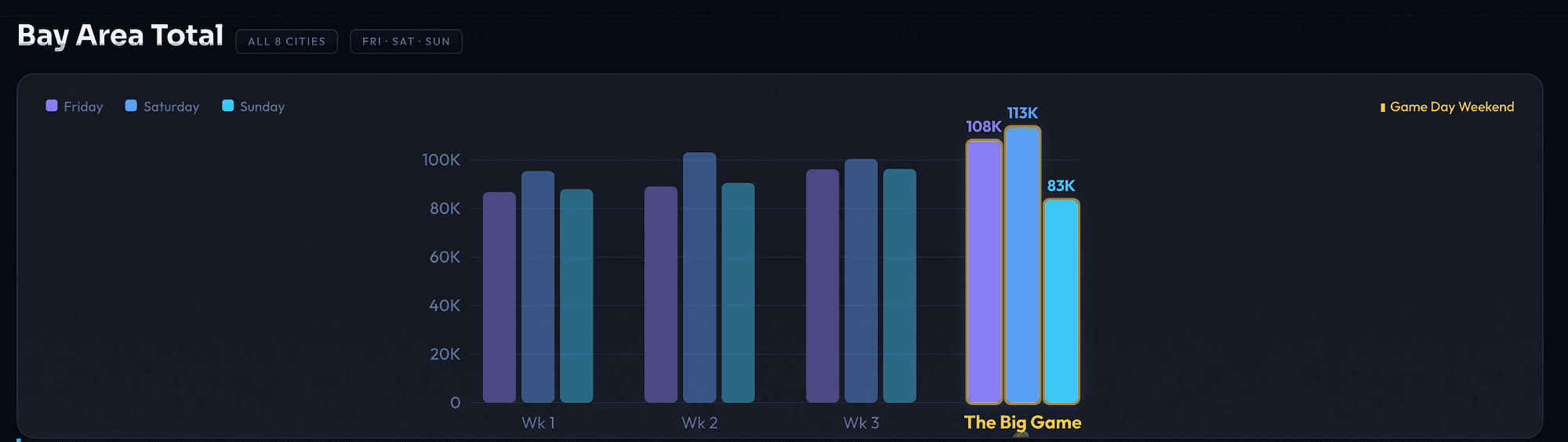
Helium Network Total Traffic In Bay Area, California 1/16/26–2/8/26
Here’s what the data shows:
First, the baseline. In a normal week, traffic follows a rhythm. Weekends climb to 80K–100K daily unique subscribers on Helium.
The Big Game WiFi Offload Surge: Helium Network in the Bay Area saw a 15% subscriber surge as visitors flooded SF, San Jose, and Oakland. Saturday hit a record 113K unique subscribers across the Network, the highest single day in the four-week window. San Jose saw the most impact with +32% more unique subscribers on Sunday, staying connected through game day. Friday and Saturday both set new highs (+20% and +12%, respectively).

What’s Behind These Numbers
Carriers route subscriber traffic through community-deployed Helium Hotspots (mini cell towers installed by regular people) in offices, restaurants, and storefronts across the Bay Area. The experience is seamless for users. The carrier avoids building expensive infrastructure. The coverage is already there because the Helium community built it.
Check out Helium coverage in these Bay Area cities: San Francisco, San Jose, Oakland, Fremont, Mountain View, Vallejo, and Martinez on Helium World.
Why This Matters for HNT
More traffic on the Network means more demand for HNT. Here’s why:
Carriers and businesses use the Helium Network. All usage is settled in Data Credits (DC).
DCs are created by burning HNT, permanently removing it from circulation.
More usage means more burn, which reduces HNT supply.
Hotspot deployers earn HNT for the data they transfer.
A traffic surge like Big Game Weekend translates directly into increased Network usage, increased HNT burn, and increased rewards for the people who deployed the coverage.

Nearly 3 Million Daily Connections on Helium
Helium Network just reached over 2.9 million phone connections daily, moving real carrier traffic through decentralized infrastructure.
Big Game Weekend showed what makes Helium different. All powered by HNT.
Check out live Helium coverage: world.helium.com